Showing posts with label Beadweaving. Show all posts

Wednesday, 2 March 2016

Increasing and decreasing a row in two needle right angle weave


In a previous post, I explained how to do two needle right angle weave. Today I will be illustrating how to increase or decrease rows in order to form different shapes. I hope it will be useful.

You can increase and decrease rows either within the row or at the end. To learn basic right angle weave click here
When we increase or decrease within the row, we gain or lose just one RAW unit.
However, when we increase or decrease at both ends, then we gain or lose two RAW units.

To increase within the row
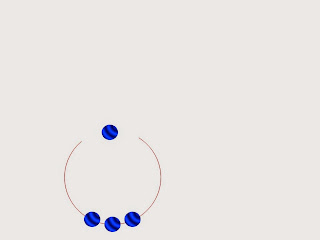
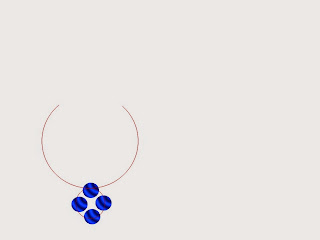
·       When we get to the position where we want to add a new RAW unit, Rather than pick up one bead with the right thread and cross with the second bead, 

·       We pick two beads and cross with a third bead like this;

Tuesday, 5 May 2015

Two Needles Right Angle Weave tutorial (Bead matting)

Right angle weave, also called bead matting using two needles was the first beadweaving technique that I learnt. This technique is so so easy and fun to learn and use, even my kids  make some jewelry with this technique.

Here is an illustration. I hope it is clear enough. Happy beading!

Materials needed

1. some beads. Could be any size, shape or color. And you can mix them up!
2. Beading thread like monofilament, fireline, c-lon and so on
3. two beading needles especially if you are using a soft thread like c-lon


STEPS

1. Cut a convenient length of your beading thread.  Then, thread your needles on both ends of the cut out thread.

2. Pick up one bead and slide it down to the middle of the threadNow pick one bead up  with each end of the threads and cross the thread ends through the fourth bead. 


Two Needles Right Angle Weave tutorial (Bead matting)


Two Needles Right Angle Weave tutorial (Bead matting)

3.  Pull both ends tight at the same time until it is like this:
Two Needles Right Angle Weave tutorial (Bead matting)